Logan Jenkins · 11 September 2026
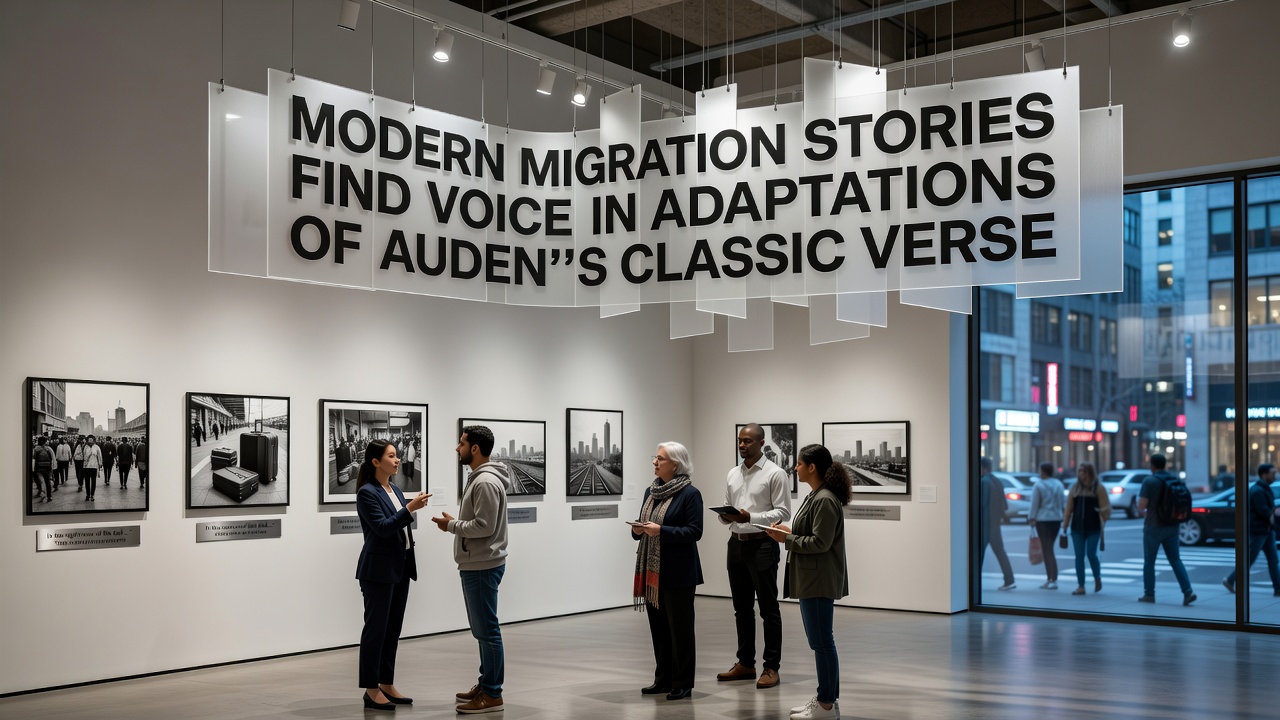
Modern Migration Stories Find Voice in Adaptations of Auden's Classic Verse
Poet W.H. Auden composed Refugee Blues in 1939 as a response to the displacement of Jewish refugees fleeing Nazi persecution, and that work has since served as a foundation for numerous stage, film, and multimedia projects that reinterpret its structure to reflect today's global migration patterns.
Directors and writers draw on the poem's repeating blues form and its catalog of bureaucratic indifference, while they update the specific references to passports, borders, and lost homes so that audiences encounter stories from Syria, Venezuela, Afghanistan, and the Mediterranean routes all within a single evening.
From 1939 Verse to Present-Day Productions
Theatrical companies in several countries have mounted versions that keep Auden's original stanzas intact for the first half of the performance and then shift into new lyrics supplied by living migrants, and these hybrid scripts have appeared at festivals across Europe and North America since the early 2010s.
One production in Toronto incorporated testimony collected by the Canadian Council for Refugees, while another in Melbourne worked with the Australian Department of Home Affairs statistics on asylum grants to shape its second act, and both shows retained the poem's A-A-B rhyme scheme throughout.
Key Elements Retained and Updated
- The refrain "Yet there's no place for us, my dear" appears in nearly every adaptation, though the line that follows now names current cities or detention centers rather than 1930s European locations.
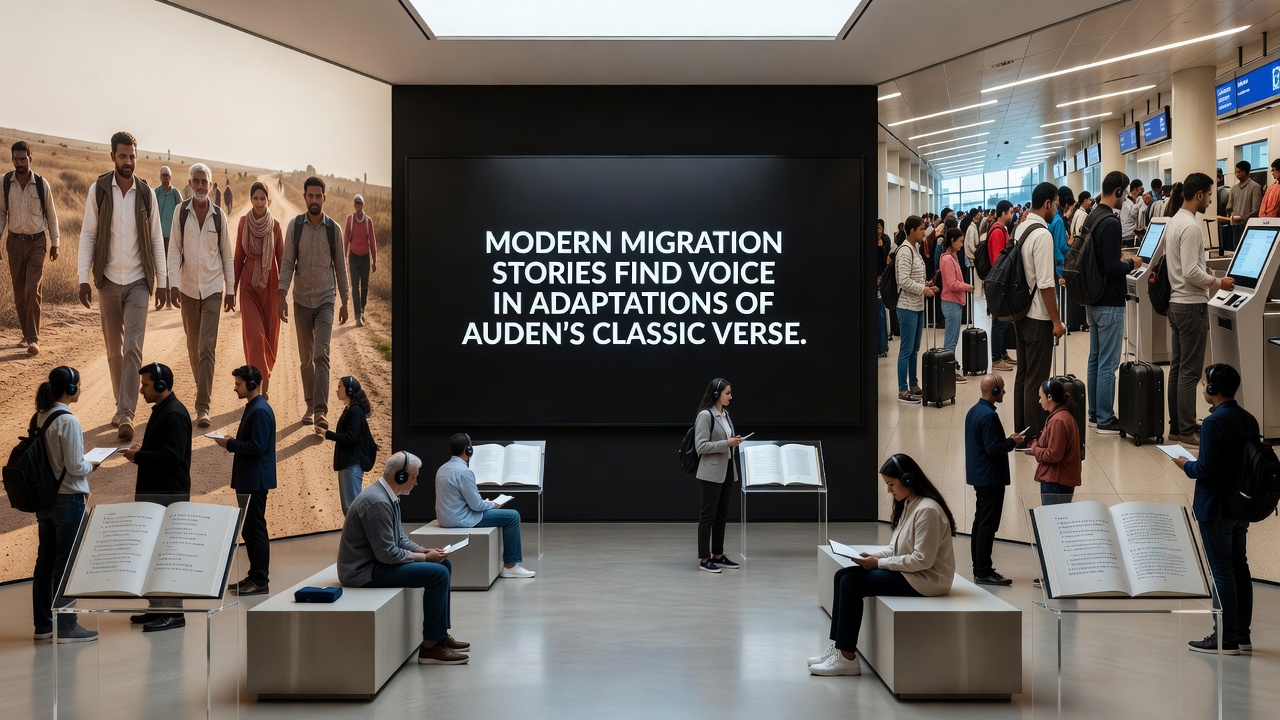
- Visual designers project passport stamps, satellite maps of smuggling routes, and social-media posts from people on the move behind the actors, and these projections replace the static newspaper headlines Auden referenced in the original text.
Sound designers layer field recordings of waves against rubber boats and airport announcements in multiple languages over the musical accompaniment, and the result preserves the jazz-blues feeling while it grounds the piece in verifiable contemporary soundscapes.
Academic and Institutional Interest
University programs in comparative literature have begun to catalogue these adaptations, and a 2024 report issued by the University of Oxford's Refugee Studies Centre documented more than forty distinct stagings or recordings created between 2015 and 2023. Researchers note that the works often travel with the communities they portray, so a single script may receive performances in three or four countries within a single year.
Funding for such projects has come from arts councils in Canada, the European Union's Creative Europe programme, and private foundations that focus on human-rights documentation, and the same organizations have scheduled a major retrospective for September 2026 at the Edinburgh International Festival.
September 2026 Programming Highlights
Organizers have announced that the September 2026 program will feature a new co-production between a London-based ensemble and a collective of Afghan storytellers now living in Manchester, and the piece will incorporate live translation into Dari and Pashto for the first time in this series of adaptations.
Additional events planned for the same month include a film installation at the Museum of Migration in Hamburg that loops excerpts from five different national productions, and a panel discussion hosted by the International Organization for Migration will examine how the poem's metrics affect audience retention of statistical information about resettlement rates.
Tickets for the Edinburgh run went on sale through the festival's website in early 2025, and early data released by organizers show that advance bookings from educational groups already exceed the totals recorded for the 2021 edition of the same strand.
Conclusion
Adaptations of Auden's verse continue to multiply because the original text supplies both an emotional template and a formal constraint that later creators can fill with fresh testimony and current data, and the September 2026 cluster of events will provide the largest single platform yet for these evolving works to reach international audiences.