Petra Müller · 25 September 2026
Auden's Wartime Broadcasts Reveal Poetry's Role in Mid-Century Media Systems
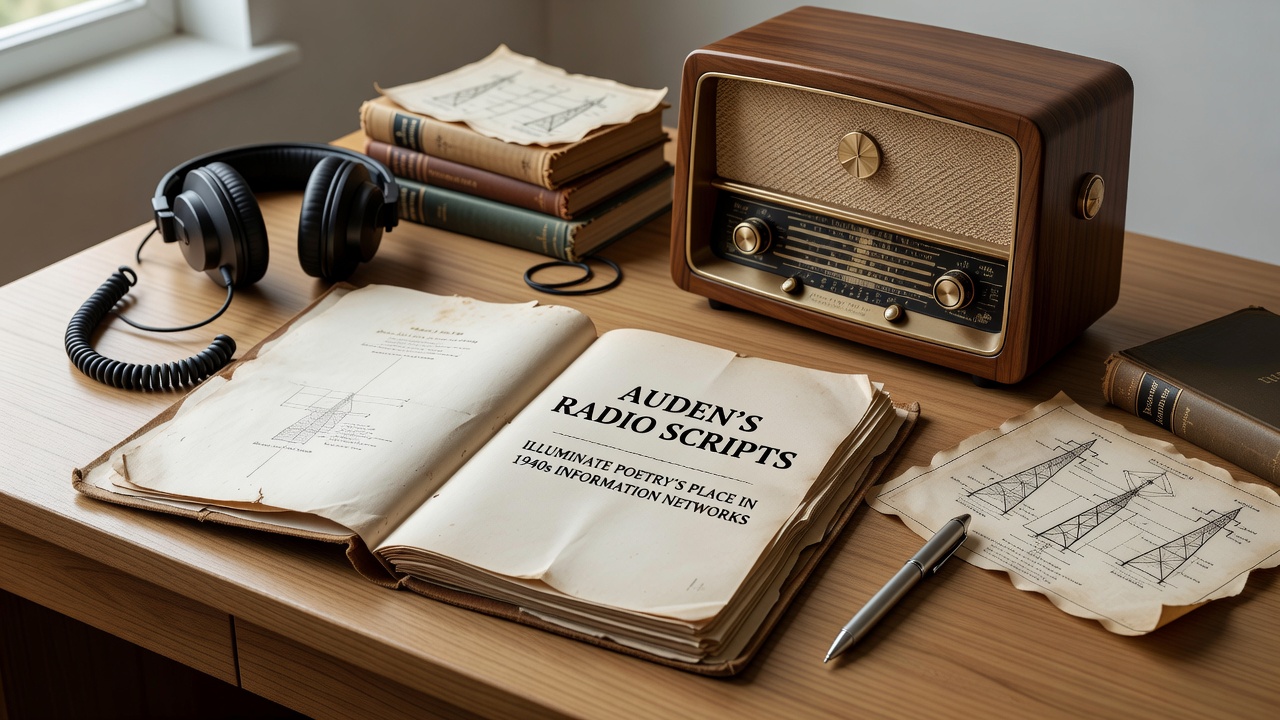
Researchers examining W.H. Auden's contributions to radio during the 1940s have uncovered how verse integrated into emerging broadcast networks that shaped public information during and after World War II, and these findings connect poetry directly to the era's communication infrastructure. Auden produced scripts for the BBC that blended literary forms with news, commentary, and educational segments, which allowed listeners access to complex ideas through structured programming schedules that reached millions across Britain and allied regions.
Broadcast Networks Expand Poetry's Reach
Archival records from the period show Auden worked on features such as "The Rock of Ages" and various morale-boosting programs that aired between 1941 and 1945, while these efforts placed poetic language alongside factual reporting on airwaves controlled by government and cultural institutions. Data from BBC listener surveys indicate that poetry segments often appeared in evening slots that drew audiences seeking both entertainment and analysis of current events, and this placement helped embed literary expression within daily information flows that extended from London studios to households in the United States and Canada through rebroadcast agreements.
One study of wartime media patterns found that Auden's scripts frequently incorporated historical references and rhythmic phrasing to convey themes of resilience, whereas producers at the time coordinated these elements with sound effects and narration to maintain audience attention across longer segments. Observers note that such techniques reflected broader trends in which poetry served as a bridge between elite literary traditions and mass communication platforms that operated on strict timetables set by regulators and station managers.
September 2026 Archive Release Highlights New Connections
Plans announced for a September 2026 exhibition at a major academic library will display newly digitized versions of Auden's radio manuscripts alongside correspondence with producers, and this event will allow scholars to trace how specific lines from his poems adapted for broadcast aligned with intelligence briefings and cultural directives issued during the conflict. Figures from the project indicate over 200 pages of material will become available online through partnerships involving institutions in the United Kingdom and the United States, which builds on existing holdings at the British Library and the Library of Congress.
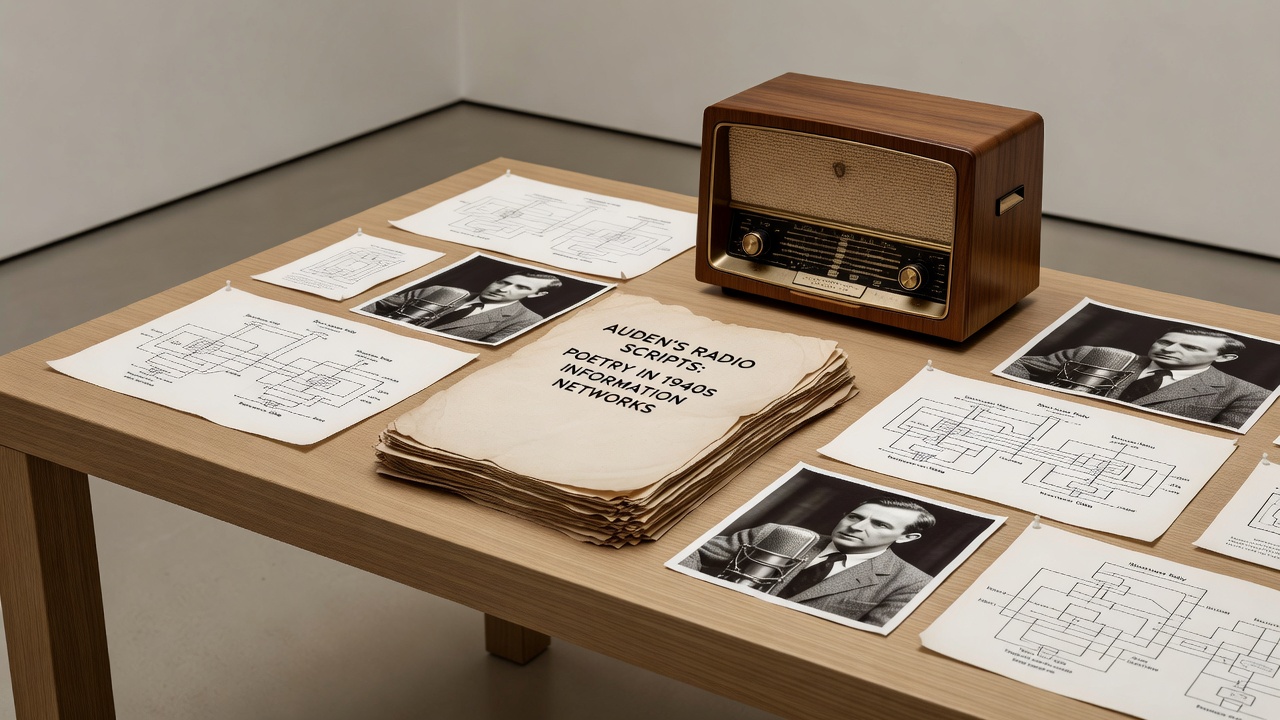
Those reviewing the materials have identified instances where Auden collaborated with figures such as Louis MacNeice on joint productions that mixed verse drama with documentary elements, and these collaborations illustrate the interconnected nature of literary circles and broadcasting teams that operated under wartime resource constraints. Evidence from production logs reveals that scripts underwent multiple revisions to fit transmission lengths and censorship guidelines, while still preserving core poetic structures that encouraged listeners to engage with abstract concepts through familiar auditory patterns.
Information Systems Integrate Literary Forms
Academic analyses of 1940s media ecosystems demonstrate that radio served as a primary channel for distributing cultural content across national boundaries, and Auden's involvement highlights how poets contributed to content strategies that balanced propaganda needs with artistic integrity. Reports from the era detail how his work on programs discussing literature and society reached overseas audiences via shortwave transmissions coordinated through allied networks, which extended the influence of British poetic traditions into regions with limited print access during and after the war.
Take the case of one series that featured Auden reading selections from his own work followed by discussion segments, where researchers discovered that audience correspondence archives contain letters from listeners who referenced specific phrases weeks after broadcast dates. This pattern suggests sustained engagement with material delivered through radio's temporal structure, in contrast to the more static nature of printed collections that required physical distribution.
Legacy in Media Studies
Current projects tracking the evolution of information networks continue to reference Auden's radio output as an early example of multimedia adaptation, and these references appear in reports issued by organizations such as the European Broadcasting Union and university research centers focused on communication history. Data compiled from preserved recordings and transcripts show measurable overlaps between poetic devices and rhetorical techniques used in news delivery, which points to shared practices across creative and informational domains during that decade.
Yet the full scope of these integrations remains under examination, as additional private collections surface periodically and offer further details on production decisions that shaped final airings. Those examining the intersection of literature and broadcasting note consistent evidence that Auden's scripts adapted traditional forms to fit the demands of live transmission and recorded playback systems that defined 1940s media infrastructure.
Conclusion
Records and analyses establish that Auden's radio scripts positioned poetry within the operational frameworks of wartime and postwar information systems, which connected literary practice to broadcast technology and audience reach on a scale previously unavailable. The September 2026 release will expand access to primary materials that document these placements, while ongoing studies draw from sources across multiple continents to map the precise pathways through which verse entered public discourse via radio channels.